The work of bestselling spiritual author Eckhart Tolle shares a surprising number of similarities with prior writers, my research has revealed. With hundreds of uncanny correspondences uncovered, the question must …
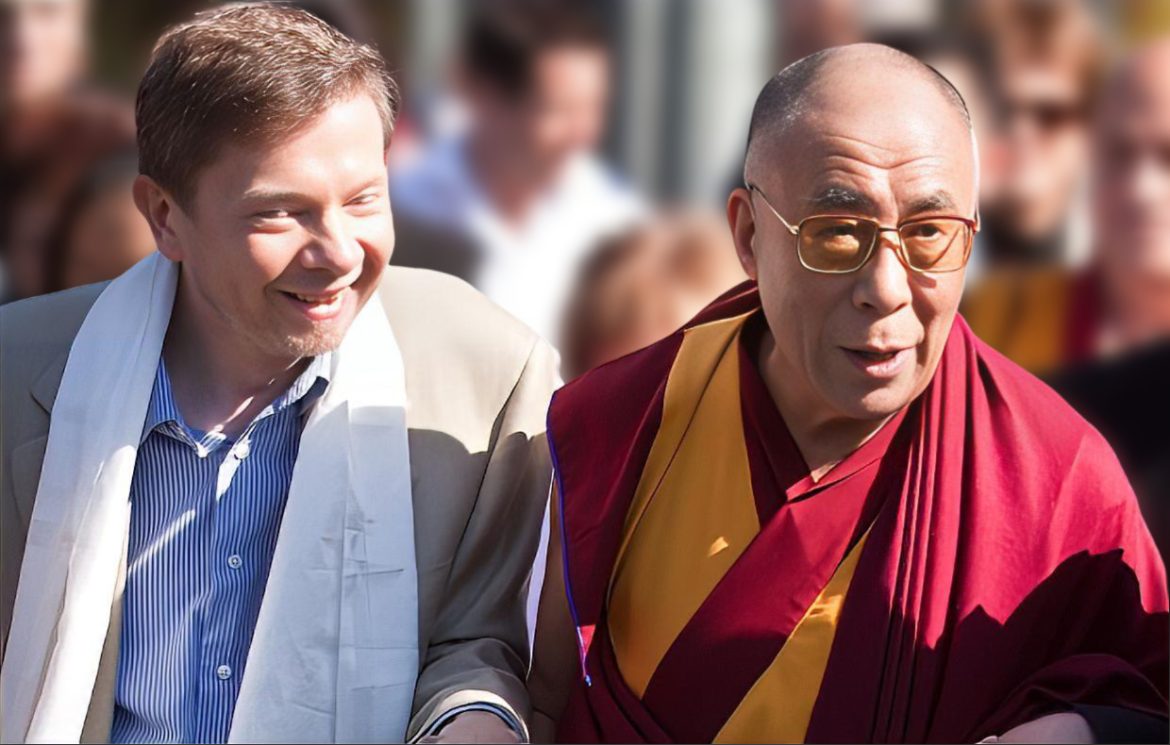
The work of bestselling spiritual author Eckhart Tolle shares a surprising number of similarities with prior writers, my research has revealed. With hundreds of uncanny correspondences uncovered, the question must …
15 years before he was plucked from obscurity by US talk-show queen Oprah Winfrey, the German-born Eckhart Tolle was a nondescript figure attending Barry Long’s spiritual talks in Highgate, London. …
In his bestsellers, Eckhart Tolle tells us we have a “pain-body” carrying our “living past”—a concept closely resembling ideas in Maurice Nicoll’s earlier writing. View side-by-side comparisons of more than …
Eckhart Tolle writes that negative states are contagious, toxic, cause illness and misery, yet we take pleasure in them like a drug—echoing what Maurice Nicoll wrote decades earlier.
Eckhart Tolle closely corresponds with Maurice Nicoll in describing how self-observation gives us a conscious “power of choice” over how we react to people and events. By becoming responsible for …
Eckhart Tolle mirrors Maurice Nicoll in making “the light of consciousness” integral to the practice of self-observation and inner spiritual change. Self-observation brings our dark, unconscious aspects into the light …
The way Eckhart Tolle teaches self-observation, an inner practice for self-change, has much in common with Maurice Nicoll’s earlier writing on the subject. Similar extracts are compared side-by-side in this …
Before Eckhart Tolle popularised the “Power of Now,” other Western authors wrote about the present moment. This articles features some comparisons with some of his precursors, which show clear similarities. …
Eckhart Tolle bears a striking similarity to Maurice Nicoll in describing a law of opposites affecting all life and our inner states—and how to reach a state of consciousness with …
What do we mean when we say “I”? Authors Maurice Nicoll and Eckhart Tolle describe three distinct aspects that shape our core sense of identity—and the answer. I explore how …